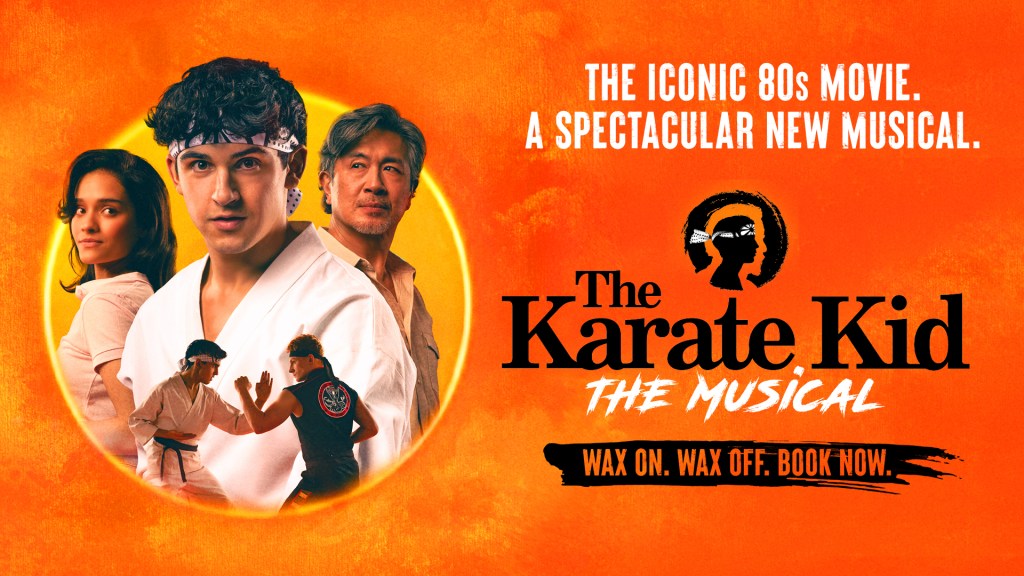
Composer Drew Gasparini and Star Sharon Sexton on bringing the Okinawan spirit and 80s heart to stages across the UK.
The 1984 film The Karate Kid is much more than a sports movie; it is a cultural touchstone that introduced the world to the “crane kick”, the wisdom of Mr Miyagi, and the phrase “wax on, wax off”. Now, over forty years since Daniel LaRusso first arrived in Reseda, the story is finding a new home on the stage.
Starting its UK tour at the New Wimbledon Theatre on 28 April 2026, The Karate Kid: The Musical arrives with a creative pedigree that promises to bridge the gap between 1980s nostalgia and contemporary theatrical artistry. Directed by Amon Miyamoto and featuring choreography by Keone and Mari Madrid, the production seeks to translate the discipline of karate into a “ground-breaking” theatrical language.
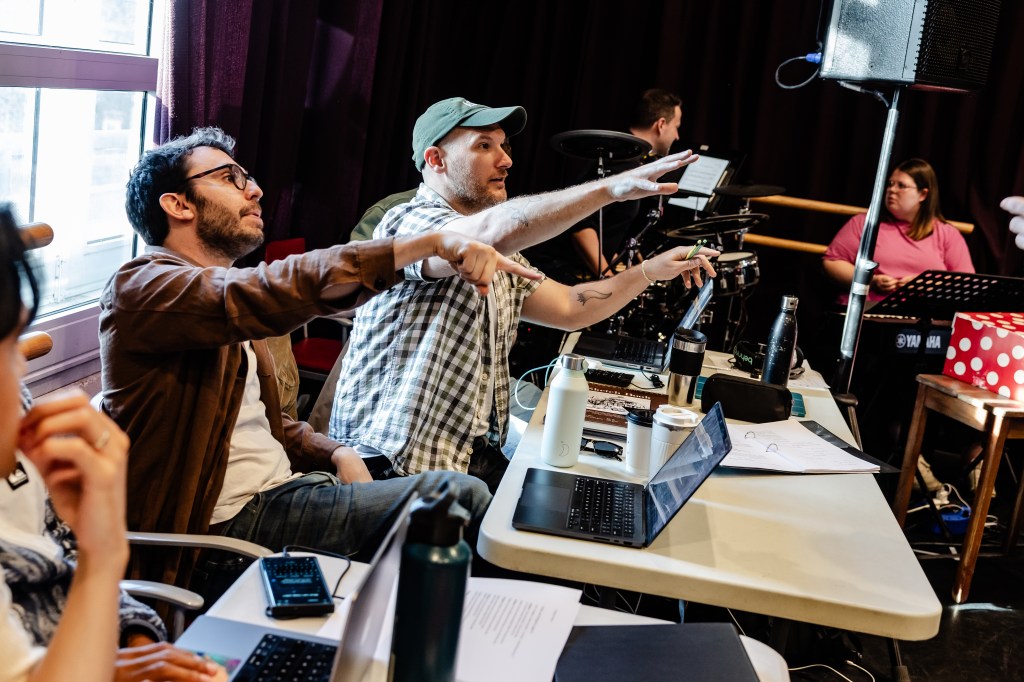
We had the pleasure of hearing from the show’s composer and lyricist, Drew Gasparini, and Sharon Sexton, who plays Daniel’s mother, Lucille LaRusso, about how they are reimagining this classic underdog story for today’s audience.
Red Bus: The relationship between Daniel and Mr Miyagi has been a cultural touchstone since 1984. How has the perspective on their bond evolved during the process of adapting it for a 2026 musical theatre audience? What does this “new” Daniel bring to the story that we haven’t seen in previous iterations?
Drew Gasparini: To me, it is more important now than it ever has been before to showcase a really healthy male bond and male dynamic in a world that is riddled with toxic masculinity, and men, especially young men, needing guidance and wisdom by someone who is deep in their core, very gentle and caring, and shares the practice of finding balance. Our Daniel is just a richer evolution of what the Ralph Macchio Daniel was, and that is the magic of a musical: getting to write songs that explore those inner thoughts that you don’t get to hear out loud in the movie.

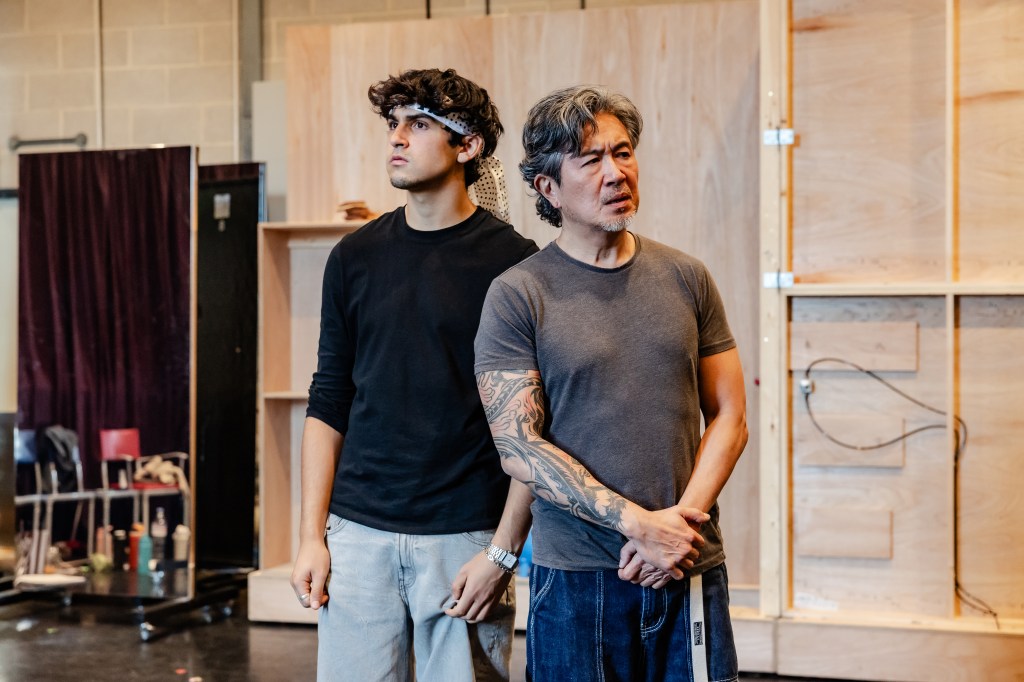
Sharon Sexton: I think we all need a Miyagi in our life, who is a kind of inspiration, and also a type of mentor. That’s what he is to Daniel in the movie, and he offers Daniel a real solid foundation that Daniel is missing in his life. That perspective is still there in the musical, but the show also spins this differently. Perhaps I notice this more because I am older than when I first met these characters, but in the musical we see this relationship through a different lens, where we also see how important Daniel is for Miyagi. The musical is told through Miyagi’s eyes and it is a really interesting framework, for an audience to also discover how much Daniel taught Miyagi, about himself.
The story is famously a “universal” one, but it is rooted deeply in Japanese culture and the specific discipline of karate. How does this production strike the balance between honoring those authentic cultural roots and maintaining the “wax on, wax off” charm that global audiences expect?
Drew Gasparini: This production of The Karate Kid: The Musical is a brilliant opportunity to showcase many cultures and the bridging of gaps between those cultures. And of course, there is the Okinawan aspect of Mr Miyagi and his Japanese roots and his roots in the war of World War II and what he lost during all that. There is a lot to bind together. And again, a musical is a perfect opportunity to not just give those cultures a voice, but to enrich those cultural differences and showcase that those differences are not just okay, but they are beautiful and they are necessary.
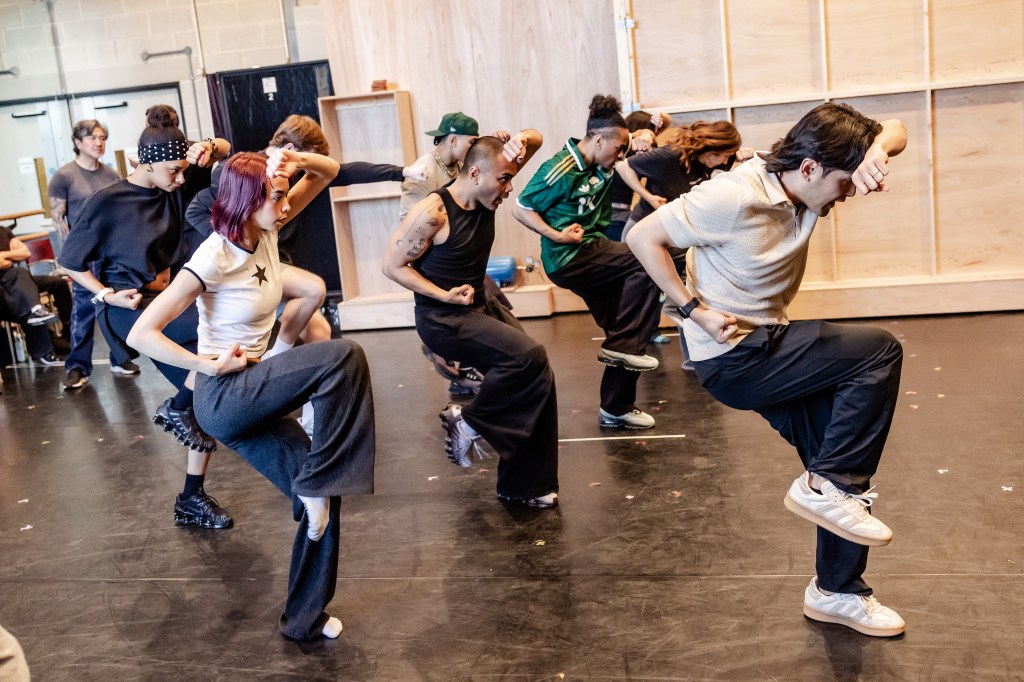
How do you translate the discipline and philosophy of martial arts into a “ground-breaking” theatrical language? Is there a specific moment in the show where you feel the movement or choreography perfectly bridges the gap between a fight and a dance?
Drew Gasparini: I don’t think there are any shows in musical theatre history that showcase martial arts the way that we are capturing it. Obviously, The Karate Kid, you need a good deal of karate in the movement language of the show, but the way our choreographers Keone and Mari and our fight coordinator Kevin McCurdy have blended those two worlds is this graceful dance between peace and violence basically. I have never seen anything quite like it on a stage, especially not as successfully as we are portraying those movement styles.
The 1980s had a very iconic musical identity. How did the team approach creating an “electrifying” contemporary score that feels fresh for today’s listeners while still capturing the heart and nostalgia of the original story?
Drew Gasparini: I really wanted to avoid making fun of the 80s in any way. Some of the best music that still lives in our blood today… came from the 80s. And it was really fun writing for young-minded characters like Daniel and Ali and putting a lot of like Phil Collins and Duran Duran and Billy Idol and even AC/DC and Peter Gabriel and a lot of those influences into the score. But then each character really needs their own sonic landscape within which to live. So for the villains like Sensei Kreese, I really went hard in electric with some Metallica influences. For Mr Miyagi, a man of very few words who comes from Okinawan roots, the producers actually flew me out to Okinawa to study with Okinawan musicians to make sure that I was living within the proper scale structure and chord structure. We used this instrument called a sanshin; it was a perfect element to incorporate into this score along with all of the pop 80s references.
Sharon Sexton: Our Composer Drew Gasparini flew to Japan and immersed himself in the culture and the music, to really honour the roots of the story and make sure that the entire musical score reflected that. Audiences will be able to hear this for themselves, as the score is so layered and the percussion in particular and the underscoring of scenes, transports you to another world. It is also very cinematic, which is a lovely nod to the fact that this is of course an adaptation of a movie.
What has been the most rewarding part of stepping into Daniel’s “new kid in town” world? Why do you think Daniel’s journey of finding balance will still resonate with audiences?
Drew Gasparini: It is so rewarding being able to tell the story of any underdog because I think an underdog is something that is a part of the human condition. Daniel’s journey resonates almost louder today than it did in 1984 because there is so much more comparing ourselves to others because of social media and how much access we have to other people’s lives. If you’re in this constant state of comparing yourself, you feel less than. And it is very important nowadays for people who feel that way to find their Mr Miyagi, to find their mentor, to find someone who can pull them out of that underdog moment and say, ‘You can do this’.
Sharon Sexton: I think this story will really resonate with today’s audience because the themes are more prevalent than ever. The young people in Daniel’s world are all struggling to find their voice, Ali and Johnny included, and I think trying to stand up for what you believe in, following your gut instincts and being brave enough to stand up to bullies, and any kind of injustice, is more important today than ever. It’s also really refreshing to know you are going to watch a show where hard work, effort and a good heart win in the end.
TOUR DATES:
The Karate Kid: The Musical runs at the New Wimbledon Theatre from 28 April to 9 May 2026 before continuing its UK tour.
April & May Shows
- Tuesday 28th April – Saturday 9th May: New Wimbledon Theatre, Wimbledon
- Tuesday 12th May – Saturday 23rd May: Palace Theatre, Manchester
- Tuesday 26th May – Saturday 30th May: Leeds Grand Theatre, Leeds
June Shows
- Tuesday 2nd June – Saturday 6th June: Empire Theatre, Liverpool
- Tuesday 9th June – Saturday 13th June: New Theatre, Oxford
- Tuesday 16th June – Saturday 20th June: Milton Keynes Theatre, Milton Keynes
- Tuesday 23rd June – Saturday 27th June: Festival Theatre, Edinburgh
- Tuesday 30th June – Saturday 4th July: Theatre Royal, Glasgow
July & August Shows
- Tuesday 7th July – Saturday 11th July: Lyceum Theatre, Sheffield
- Tuesday 14th July – Saturday 18th July: Empire Theatre, Sunderland
- Tuesday 21st July – Saturday 25th July: The Alexandra, Birmingham
- Tuesday 28th July – Saturday 1st August: Wales Millennium Centre, Cardiff
International Dates
September – November: The Princess of Wales Theatre, Toronto, Canada
HOW TO SAVE ON TICKETS TO THE KARATE KID: THE MUSICAL
ATG+ Membership: If you’re planning on seeing multiple shows this year (like Mean Girls or Jersey Boys which are also touring), an ATG+ membership usually removes the booking fees and can offer other savings.
Under 16s Offer: At some venues (like Sunderland Empire), there is a specific £5 off discount for Under 16s on selected seats for Tuesday–Thursday performances.
ATG Local Heroes: Blue Light Card holder can get up to 25% off selected performances at New Wimbledon, Glasgow, and Liverpool.
Early Week Savings: Prices for the New Wimbledon run currently start from £15.60 for certain mid-week performances.
Check out my full Young Person Theatre Discount Guide for more ways to see big musicals at discounted prices.
Like this article? Please stay around to read my reviews:
- Review: The Importance of Being Oscar, Park Theatre ★★★★

- Camden Fringe Review: 1918: The Final Salome, Etcetera Theatre ★★½

- Review: Cyrano de Bergerac, Noël Coward Theatre ★★★★½

- Review: Firebird, Southwark Playhouse ★★★★

- Review: Oresteia, Bridge Theatre

- Pride, National Theatre (Dorfman) ★★★★

- Review: Good For Her!, The Other Palace ★★★

- Review: Here Comes J. Edgar!, King’s Head Theatre ★★★★

- Review: Abigail’s Party, Richmond Theatre (and on tour) ★★★★

- Review: Avenue Q, Shaftesbury Theatre ★★★★

- Review: Local, Finborough Theatre ★★★

- Review: Tender, Bush Theatre ★★★½

 Red Bus Londinium Life