
Down at Heel, BUT Not Past It: Avenue Q Returns to the West End
Early on in Avenue Q, we meet a twenty-something flat hunter who started out looking on Avenue A and has worked his way steadily down the alphabet, all the way to Q, to find somewhere he can actually afford. It’s a small joke, but it does real work: this is Manhattan’s more desirable end shrunk to nothing, and by the time you’ve counted the letters between A and Q, you know exactly how far from the desirable end we’ve landed. This is a slightly down at heel version of Sesame Street, and we are firmly on the wrong side of town.

That down at heel quality is there in Anna Louizos‘ set too, which harks back to Sesame Street’s primary-coloured stoops and shopfronts but softens them with something closer to the warmth of a picture book. It’s a nice trick: familiar enough to trigger the nostalgia the show is banking on, worn enough to tell you these are grown-up problems now.
I went with my twenty-something son, so this was very much a show talking to him rather than to me. He was a baby when it first opened on Broadway, where it went on to win Best Musical, Best Book and Best Score at the following year’s Tonys. This 20th-anniversary West End revival at the Shaftesbury reunites much of the original creative team, including director Jason Moore and the original Broadway puppets, alongside Louizos’ set.
Twenty years on, some of it has inevitably dated. The show set out to shock: puppets, in the style of a children’s programme, saying and doing thoroughly adult things, and that combination was genuinely radical when it opened. On the Friday we went, I felt the audience arriving almost anticipating the naughtiness, waiting for the boundary-pushing rather than being ambushed by it. Live comedy now regularly goes further and faster than Avenue Q ever did. Shows like Titanique are cheerfully saucy, The Book of Mormon considerably more so, so raw explicitness alone isn’t really what still gives Avenue Q its edge.
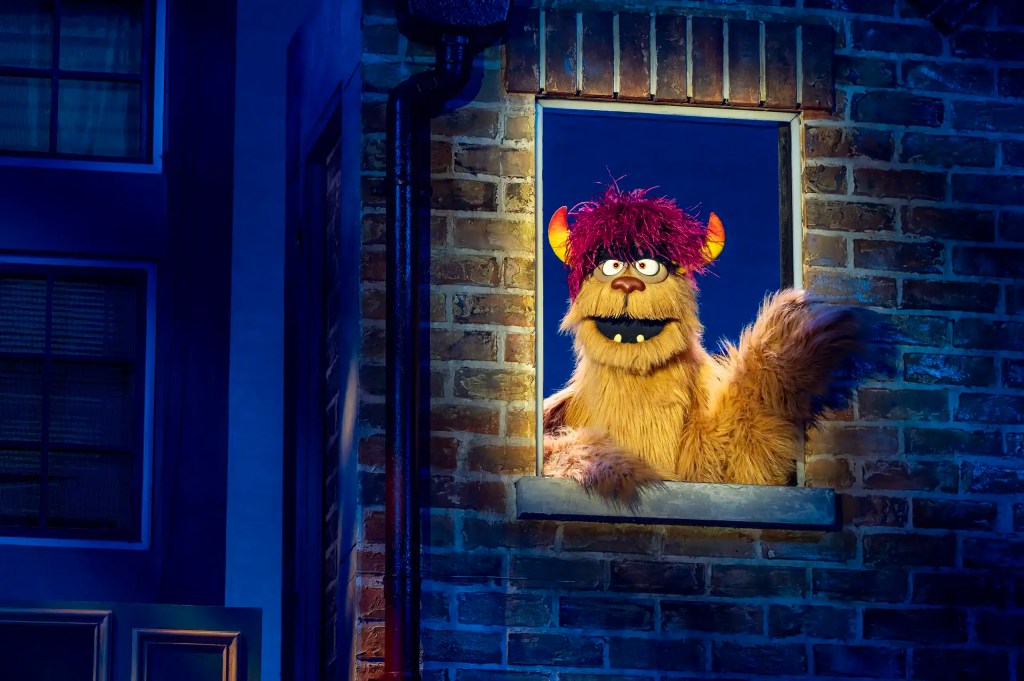
What does, I think, is who gets to be the target. Book of Mormon takes aim at naïve missionaries and a corrupt warlord, safely other people we can laugh at from a comfortable distance. Avenue Q‘s number, Everyone’s a Little Bit Racist, does something harder: it’s sung warmly, by characters you like, and it implicates the “we” sitting in the audience directly. There’s no safely fictional target to hide behind. That’s a much riskier trick than mere crudeness, the show genuinely makes you examine yourself rather than just laugh at someone else.

Where the show hasn’t dated at all is underneath the jokes. Housing precarity, the difficulty of finding a job after graduating, and social isolation were all there in 2003, and if anything they’ve sharpened rather than faded for the audience now watching it. The script has had a light update too, with references to AI and Trump worked in among the newer topical material. I haven’t seen the show before, so I can’t compare it to earlier versions, but it felt properly woven into the fabric of the show rather than bolted on for novelty’s sake.
The production’s marketing team has the same instinct. Two days before we went, England lost their World Cup quarter final, and the show’s Instagram account posted an image of Trekkie Monster draped over a dejected-looking player under the line “It Sucks to Be Us”, offering £20 off tickets to cheer yourself up, a nod to the show’s own song It Sucks to Be Me.
It made the point better than any press release could: this production knows exactly what’s happening in the country and isn’t shy about using it to poke fun.
The talent on stage makes all of this land. At times, Emily Benjamin performs Kate Monster and Lucy the Slut in the same scenes, and Noah Harrison does the same with Princeton and Rod, and in both cases we follow exactly who’s speaking and feeling what, without ever losing the thread. That’s a genuinely difficult trick, visible puppeteers per puppet, sometimes two puppets per performer, performers voicing one puppet while manipulating another: and it disappears almost entirely once the story gets going.
Meg Hateley brims with energy throughout, especially in her Bad Idea Bears partnership with Charlie McCullagh: a truly cheeky pair, egging the other characters into all the wrong choices and getting plenty of hilarity out of it. Dionne Ward-Anderson‘s Gary Coleman, meanwhile, really did feel like a Sesame Street host from my own childhood, all smile, energy and colourful costume. I knew who Gary Coleman was going in, either way, the joke works whether or not you know the real person behind it, since a washed-up child star turned building superintendent is a recognisable enough type on its own.
And Charlie McCullagh’s Internet is for Porn was genuinely funny, delivered with real relish. It left me wondering, as these things always do, just how many people in the audience laughing along were laughing in recognition rather than at a distance. We will never know.
What stayed with me leaving the theatre wasn’t the shock value, which has mostly worn off, but something more heartening: watching it =next to my son and seeing it land as his story, not mine. It’s been updated just enough to belong properly to this era, AI anxieties and all, while the core of it offers a strangely reassuring reminder that being a twenty-something, broke, under-employed and lonely in a big city, has never been easy, in any decade.
Image credits: Matt Crockett
Latest reviews:
- Camden Fringe Review: The Barber of Seville, Opera Kipling ★★★★

- Review: Love’s Labour’s Lost & Much Ado About Nothing, OT on the Hill ★★★★½

- Review: Republic of Silence, Riverside Studios ★★★½

- Review: The Truth, Apollo Theatre ★★★★

- Review: Cleansed, Almeida ★★★★

- Camden Fringe Review: This App Is a Haunted House ★★½

- Camden Fringe Review: Bathroom, Etcetera Theatre ★★★½

- Review: Matthew Bourne’s The Car Man, Sadler’s Wells ★★★★★

- Review: Dark of the Moon, Charing Cross Theatre ★★★

- Camden Fringe Review: Asian Pirate Musical, Upstairs at the Gatehouse ★★★½

- Review: The Importance of Being Oscar, Park Theatre ★★★★

- Camden Fringe Review: 1918: The Final Salome, Etcetera Theatre ★★½

 Red Bus Londinium Life