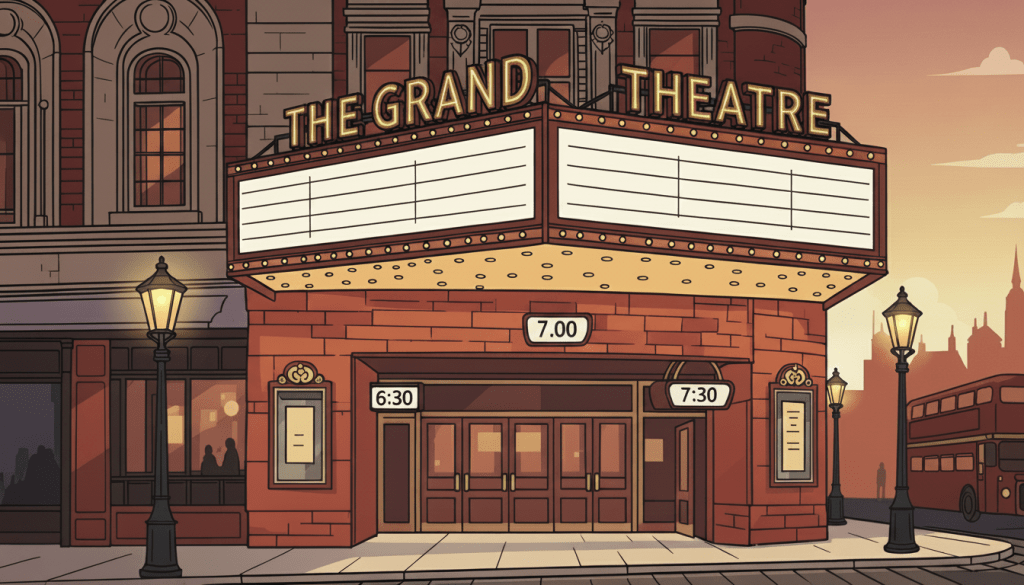
As someone who frequently hops on a bus or tube to cover everything from the smallest pub theatre to the grandest West End stage, I have always enjoyed the anticipation felt on the journey. There is a specific kind of magic in that transitional hour when the city’s daytime bustle begins to soften into the anticipation of the evening. However, that delicate balance is currently under the spotlight. While the National Theatre and other major venues experiment with 6:30 pm or 7:00 pm curtains, we need to look at what this actually means for the person sitting in the stalls, especially those of us travelling in from the suburbs. It is a debate that pits the comfort of an early night against the logistical reality of the London commute, and as we shall see, the right answer often depends on which zone you call home.
The Pros: Why Early STARTS Appeal
A Manageable Return to the Suburbs
For those living in outer London or the home counties, a show that ends at 9:15 pm rather than 10:30 pm is a game changer. It ensures you can catch a reliable train rather than the “last service” of the night, meaning you are back through your front door at a reasonable hour for a working day.
Maximising the Value of the Trip
With rail fares and petrol prices constantly on the rise, many enthusiasts are now trying to see as much as possible in a single visit. Staggered start times allow for a more flexible day. You might find a 1:00 pm lunchtime performance and a 6:00 pm early evening show, allowing you to get double the culture for a single day’s travel cost.
Better Access for Long Productions
Some plays push the three hour mark. An early start makes these marathon productions much more accessible. It prevents the audience from constantly checking their watches during the final act to see if they will make their connection at Waterloo or Victoria.
The Cons: The Reality of the Journey
Adding to the Peak Hour Crush
When a show starts at 6:30 pm or 7:00 pm, the journey into central London coincides exactly with the evening rush hour. By aiming for an earlier curtain, theatregoers are adding themselves to an already strained tube and bus network.
The Death of the Pre-Theatre Experience
The 7:30 pm start time used to allow for a civilized transition from work to play. It gave you time to travel after the worst of the rush and perhaps enjoy a meal. A 6:30 pm start effectively forces you to choose between work and food. For many, the “theatre experience” is now being reduced to a hurried sandwich eaten while standing on a crowded platform.
Inflexibility for the Modern Worker
An early start leaves no room for error. If a meeting runs over by ten minutes or there is a minor delay on the line, you risk missing the first act entirely. This creates a barrier for the very people the theatre needs to attract, as the stress of “making it on time” starts to outweigh the enjoyment of the performance itself.
.
The Red Bus Verdict
While the 6:30 pm pilot programs are an interesting experiment, we must be careful not to make the commute an impossible hurdle. The transport network is already at a breaking point during the early evening.
Perhaps the best way forward is a varied schedule where only one or two nights a week offer an early start. This would allow those who need to get home early to do so, while leaving the traditional slots open for those who prefer to travel when the tube is a little quieter and the pace of the evening is a little more relaxed.
A Brief History of START TIMES
The quest for the “perfect” start time is as old as the London stage itself. In the 18th century, performances often began as early as 6:00 pm. This allowed the audience to enjoy a full evening of entertainment, often a five-act tragedy followed by a lighter “afterpiece”, while still relying on candlelight and the safety of daylight for the journey home.
As the Victorian era progressed, the “fashionable” dinner hour began to slide later into the evening. To accommodate the rising middle class and the elite who wished to dine before the show, curtain times moved to 7:00 pm or 8:00 pm. The introduction of gas lighting in theatres like the Lyceum and Drury Lane meant that late-night departures were no longer shrouded in total darkness, making the late finish a mark of sophistication.
By the mid-20th century, the 7:30 pm start became the industry standard. It struck a gentle balance between the end of the traditional working day and the schedules of the suburban railways, which were expanding rapidly.
Today, as our working patterns become more flexible and our transport network more congested, we are simply seeing the next chapter in this long-running story. Whether it is 6:30 pm or 7:30 pm, the goal remains the same: ensuring the magic of the performance is worth the journey there and back.
Like what you see here? Stay around and read my latest reviews:
- Review: Here Comes J. Edgar!, King’s Head Theatre ★★★★

- Review: Abigail’s Party, Richmond Theatre (and on tour) ★★★★

- Review: Avenue Q, Shaftesbury Theatre ★★★★

- Review: Local, Finborough Theatre ★★★

- Review: Tender, Bush Theatre ★★★½

- Review: To Kill a Mockingbird, Wyndham’s Theatre ★★★★

- Review: Archduke, Royal Court ★★★

- Review: Last Goal Wins, Broadway Theatre, Catford, ★★★★½

- Review: Kinky Boots, London Coliseum ★★★½

- Review: Relics, Lyric Hammersmith ★★★★

- Review: Rayuela: Compañía Marco Flores, Sadler’s Wells East ★★★★

- Review: Lost the Plot, Omnibus Theatre, Clapham ★★★★

 Red Bus Londinium Life