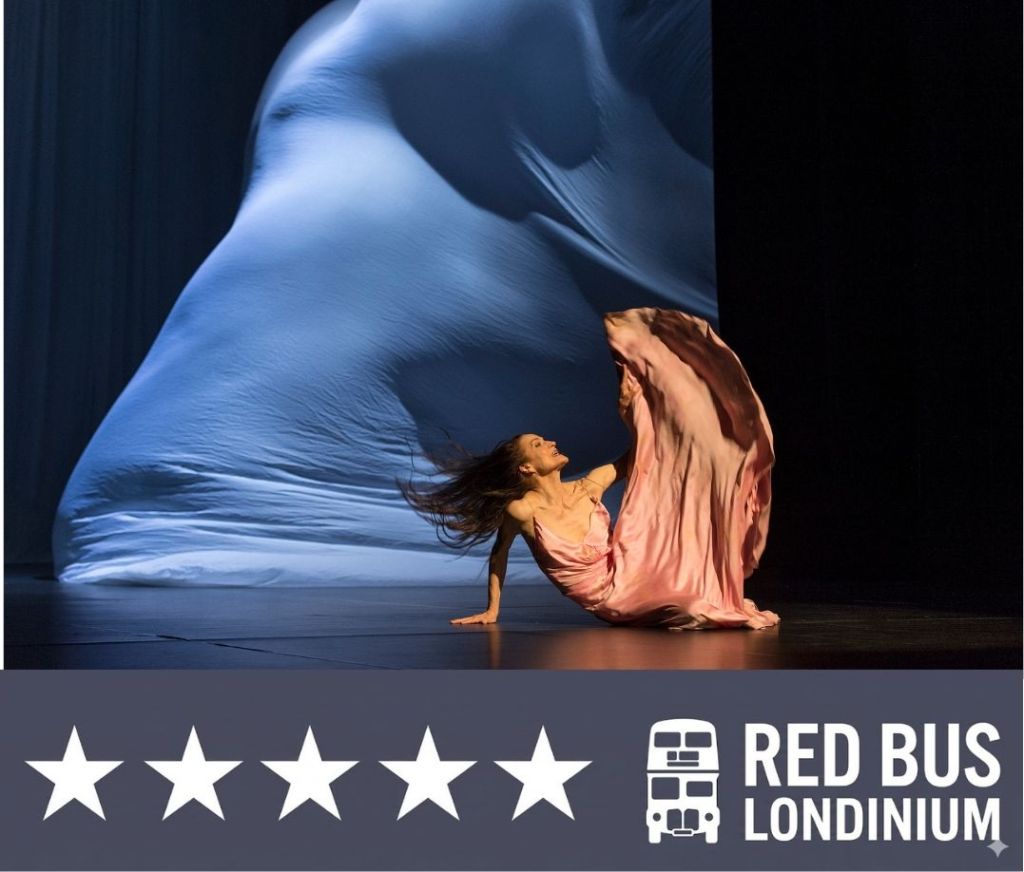
Sweet Mambo at Sadler’s Wells: Pina Bausch’s Tanztheater premiere in London
Nearly twenty years after its world premiere, Pina Bausch’s Sweet Mambo finally arrives in London at Sadler’s Wells. This penultimate work by one of the 20th century’s most influential choreographers brings her distinctive Tanztheater style into sharp focus, combining striking imagery with emotional exposure. Those expecting dance that blends theatre, music and inventive stagecraft, and that leaves a lasting impression, will not be disappointed.
Pina Bausch transformed dance into a global theatrical language. Her career was recognised with honours including the Deutscher Tanzpreis, Praemium Imperiale and the Laurence Olivier Award, followed later by the Kyoto Prize, Goethe Prize and election to the American Academy of Arts and Sciences. More importantly, her work reshaped how movement can communicate inner life and continues to influence artists worldwide.
Her Tanztheater draws as much on everyday gesture as formal dance, weaving together movement, speech, music and imaginative props. The stage becomes a place of unexpected encounters. Dancers move through billowing fabric and handle objects and one another in ways that surprise and unsettle, creating images that feel at once familiar and strange.
Narrative is never quite the point. Instead, Bausch began with questions. In her process, her dancers were asked things like, “What do you do when you feel tender toward someone?”, “What did Christmas dinner look like when you were a child?” Their answers form the building blocks of her pieces. Rather than a single storyline, Sweet Mambo unfolds as a series of vignettes, accumulating experience, sensation and emotional memory. The result can be mesmerising, baffling, transporting and occasionally confronting. It is a quality that actor Alan Rickman recognised: “Pina Bausch pins you to your seat. It’s like she’s connected to your bloodstream or something. She knows about fears, fantasies and dream-life. It’s like meeting your own imagination“.
Bausch once said she was “not interested in how people move but what moves them”, describing how childhood sounds, smells and sights resurfaced in her work, with memories taking “place again much later on the stage.” That philosophy sits at the heart of Sweet Mambo, where small gestures are charged with meaning and emotion drives each sequence.
Desire, fear, laughter and pain are laid bare. Seven dancers from the 2008 premiere return for this 2025 production, joined by newer members of the company. Together they draw on years of lived experience to communicate what resists language, shaping intense and often frenetic solos largely carried by the women. The men are fewer in number but insistently present, hovering, tugging, kissing and coercing. Their proximity feels intimate and limiting, sharpening the focus on female experience and the uneasy dynamics between genders.
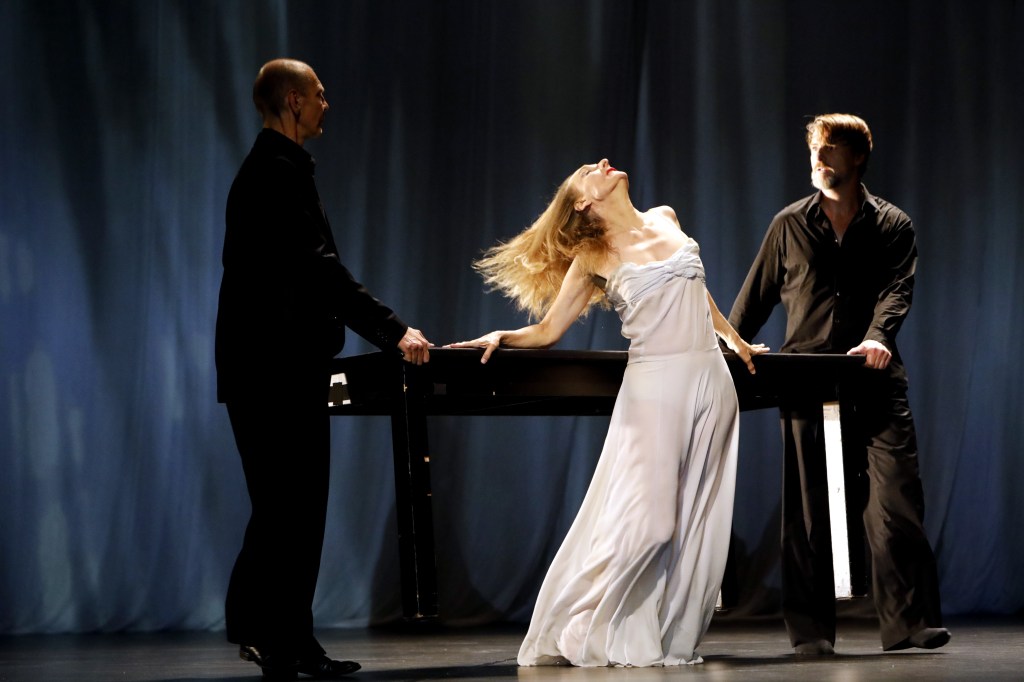
The score emerged through experimentation in rehearsal, with music following movement rather than dictating it. From the haunting vocals of Mari Boine to the brooding textures of Portishead, it reinforces the sense that the work evolves organically from the performers themselves.
Design elements complete the world of the piece. Peter Pabst’s set uses flowing fabric that actively engages with the dancers, while Marion Cito’s costumes heighten the emotional register of each scene.
Sweet Mambo is a masterclass in movement as storytelling. It captures both the tenderness and severity of life, inviting audiences to feel rather than simply observe. For anyone curious about how dance can give form to what cannot be said, this long-awaited London premiere is essential viewing.
[Thank you to Sadler’s Wells who provided a gifted ticket in exchange for an honest review.]
Latest reviews:
- Review: Ancient Grease, The VAULTS ***

- Review: Mythos: Ragnarök, Alexandra Palace ****

- Review: Children of the Night, Southwark Playhouse ****

- Review: Iron Fantasy, Soho Theatre ***1/2

- Review: Russell Maliphant Dance Company Landscapes, Sadlers Wells East ****


 Red Bus Londinium Life
Leave a comment