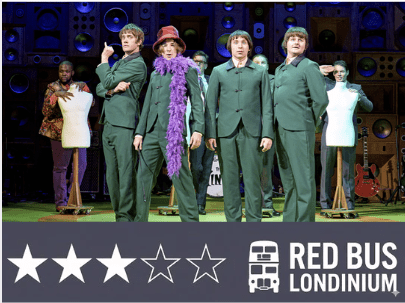
Now playing at New Wimbledon Theatre, Sunny Afternoon remains a real pleasure for Kinks fans and a reminder of why the show swept up a cluster of Olivier Awards when it first arrived in 2015, including Best New Musical, Outstanding Achievement in Music, and Best Actor in a Supporting Role in a Musical. It may not feel especially ground-breaking in today’s crowded jukebox-musical landscape, where so many shows compete for attention, but its craftsmanship and sincerity still make it a rewarding ride. And it’s worth remembering that when it premiered, the genre was far less saturated and few productions attempted to weave such a rich, biographical narrative through the music,
The show serves up tightly played renditions of the band’s greatest hits while digging deep into the brothers’ tangled family history and the roller-coaster trajectory of their career. Even if you come in knowing little about the group, it offers a surprisingly engaging look at how artistic success can be shaped, and sometimes derailed, by the people advising you, all before ending on a buoyant medley that sends the audience out grinning.
What’s particularly impressive is the show’s refusal to gloss over the more uncomfortable chapters of the band’s story. Joe Penhall‘s book tackles the volatile yet creatively essential relationship between brothers Ray and Dave, Ray’s emotional struggles, the disastrous American tour and subsequent US blacklisting, along with the exploitative contracts and management missteps that drained their finances and momentum. Rather than shying away from these fractures, the production places them centre-stage, revealing how conflict, vulnerability and poor guidance shaped the music as much as inspiration did.
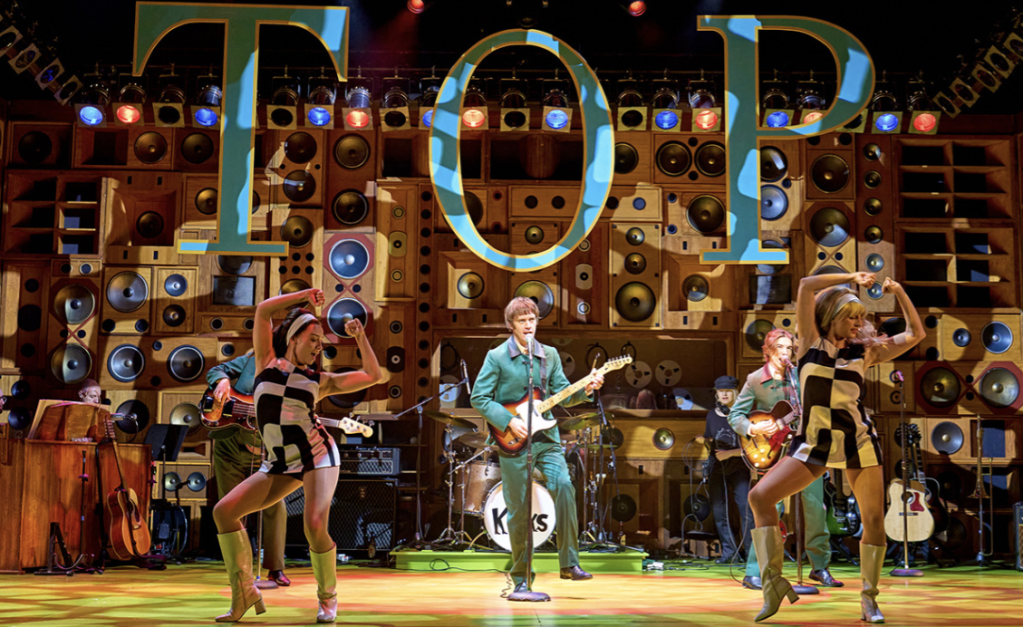
The musicians portraying the core Kinks lineup: Danny Horn as Ray Davies, Oliver Hoare as Dave Davies, Harry Curley as Pete Quaife, and Zakarie Stokes as drummer Mick Avory capture both the swagger and sensitivity of the band’s sound. They’re supported by a wider ensemble of actor-musicians who step in, double up, and at times take over instruments when the central four are mid-scene, creating an ebb and flow between storytelling and performance. The result is a welcome flexibility that keeps the sound vibrant no matter what’s happening dramatically onstage.
The set, though largely static, is striking. A wall of wooden speakers of every size rises behind the action, creating an atmosphere that feels part rehearsal room, part shrine to the music. It is simple but evocative, giving the story a textured, lived-in backdrop that suits the production’s focus on memory and reconstruction.
In the end, the production transports you back to the long, languid summer of 1966, when Sunny Afternoon first drifted across the airwaves. It may not blaze new trails, but it offers a pleasant and nostalgic night out, warmed by the unmistakable charm of the Kinks’ music.
[Thank you to New Wimbledon theatre for the gifted tickets for an honest review].
Recent reviews:
- Review, Yentl, Marylebone Theatre, ****
- ATG Discounts with Student Beans
- Review: Jaja’s African Hair Braiding, Lyric Hammersmith ****
- Review: Welcome to Pemfort, Soho Theatre ****
- Review: Waitress Musical, New Wimbledon Theatre *****
New Wimbledon Theatre reviews:
- Review: &Juliet, New Wimbledon Theatre *****
- Review: Dear Evan Hansen, New Wimbledon Theatre ****
- Review: Friends! the Parody Musical, New Wimbledon Theatre, ***
- Review: Ghost, New Wimbledon Theatre ***
- Review: Hairspray, New Wimbledon Theatre ***½
- Review: Here You Come Again, New Wimbledon Theatre ****
- Review: Hijinks and Caviar, New Wimbledon Theatre **
- Review: Jack and the Beanstalk, New Wimbledon Theatre ****
- Review: Jesus Christ Superstar, New Wimbledon Theatre ****
- Review: Madagascar, New Wimbledon Theatre ****
- Review: NOW that’s What I Call A Musical, New Wimbledon Theatre ***
- Review: Sunny Afternoon, (on tour), New Wimbledon Theatre, ***
- Review: The Ecstasy of Hedy Lamarr, New Wimbledon Theatre, ****
- Review: The Gardening Club, New Wimbledon Theatre ****
- Review: Waitress Musical, New Wimbledon Theatre *****

 Red Bus Londinium Life
Leave a comment