Theatre etiquette as a debate has reared its divisive head recently as the shared agreement around how one should behave while watching a musical (you watch, they sing) becomes less universal.
Anti-social behaviour is increasing in theatres and Bectu (the union for front-of-house workers) has launched their Anything doesn’t go campaign to highlight the issues. The context makes stark reading with Front of House staff being asked do deal with drunk, angry and volatile audience members when they ask them to comply with requested behaviours, such as not singing along.
It was in this context, that Alison Hammond, Dermot O’Leary and Vanessa Feltz made an ill-timed intervention with Vanessa chortling that she would sing the wrong words loudly while eating an ice cream and Alison saying she would not attend a show if she couldn’t sing along. (Alison has since made a sincere apology).
Their banter minimised the clear difficulties and theatre twitter was first outraged, then vindicated, when the next day a performance of the Bodyguard was stopped due to disruptive audience behaviour.
Because it is thorny . Theatre tickets are hugely expensive so everyone wants to get exactly what, they feel, they have paid for. If one lot think they should be able to sing, one lot detest them singing, and the poster says Best Party In Town whose rights triumph?
We can, I hope, all agree that violence or abuse of Front of House staff is never OK, but a YouGov poll released today shows that there is little cohesion in audience attitude elsewhere. Of those who attend the most musicals (once every 2-3 months), 58% say they should be able to sing along.
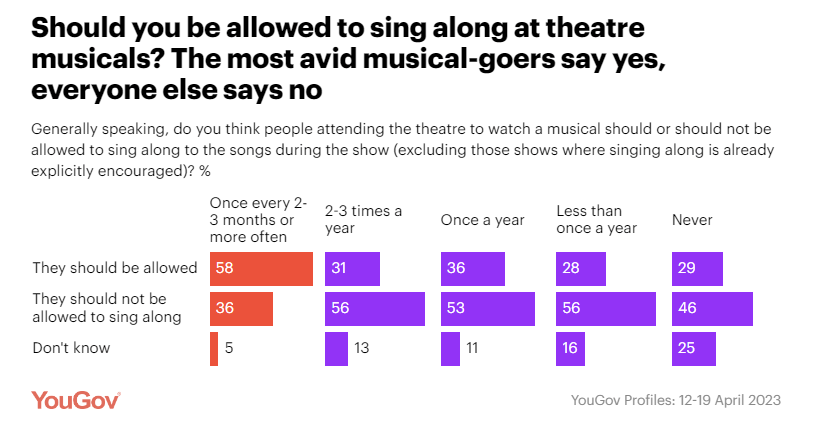
However, these super-fans only make up 5% of the audience and one man’s meat is another man’s poison. In every other group, believing singing along is acceptable is a minority opinion. Allowing super-fans to sing could likely damage audience numbers from other sectors who, if they cannot hear the actors, may prefer to spend their ticket money elsewhere.
On the other hand, the opinion of regular theatre-goers is likely far more important than the 43% who say they never go to musicals.
I would also love to know whether these musical-lovers wish they could sing, but don’t, or whether they sing along anyway. Perhaps they are really hoping that theatres look more creatively at their offerings and meet their in-seat diva dreams?
Popular shows Six and Heathers now offer sing-a-long performances. It would be curious to know uptake of these performances and whether it has lead to more audience silence on other nights.
What are your thoughts on the way forward for theatres with this issue? Do please comment below.

 Red Bus Londinium Life
Leave a comment